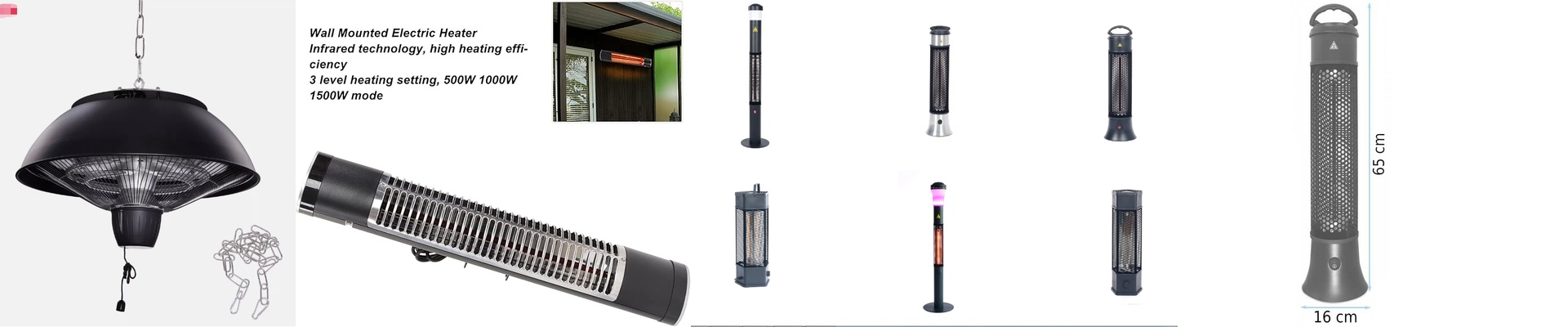
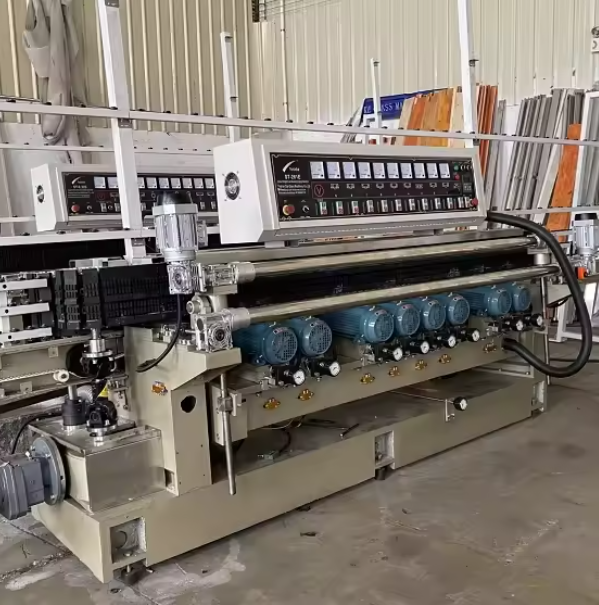
The line is running. You hear the conveyor, the pneumatic clamps, the furnace doing its thing—then you spot it: a hairline crack across a tempered panel, or a windshield with optical distortion after bending. Nine times out of ten, the root cause is the same—heat that looked “close enough” on paper, but wasn’t even across the glass. In glass processing, uneven temperature isn’t just a yield hitter. It builds thermal stress that can crack the sheet, warp the geometry, and leave optical errors that come back as customer complaints and rework. We built our industrial quartz infrared heaters for that reality. They aren’t just heat sources; they’re repeatable, measurable thermal tools, built for tempering, bending, lamination, coating drying, and insulating glass manufacturing.
What actually matters on the technical side
Industrial quartz infrared heaters deliver energy in the short-wave infrared band, which glass—and many ceramic and metallic tooling parts—absorb efficiently. Compared with convection-heavy heating, infrared transfers heat by radiation, so response is faster and control is tighter right at the point of contact. On the glass floor, that means shorter cycle times and less heat soaked into frames, belts, and fixtures. The core of the design is the quartz tube, chosen because it handles rapid thermal cycling and keeps output stable over long shifts. The emitters are arranged to create a thermal field that’s intentionally uniform—so the center of the glass and the edges get consistent energy. Uniformity isn’t a vague promise. It’s measurable: stable temperature across the heating zone, controlled emissivity, and predictable heat-up and cool-down behavior. On the shop floor, these spec points are the ones that count:
- **Wavelength and response:**Short-wave infrared gives rapid, controllable heat with low thermal inertia—so you can hold precise dwell during tempering and bending.
- **Power density and zone control:**Adjustable power and multi-zone layouts let you match the glass profile—flat, curved, thick, thin—without overheating edges or underheating the middle.
- **Temperature repeatability:**Stable, repeatable heating supports consistent sag and shape control in bending, and consistent quench response in tempering.
- **Industrial build:**The heater assembly is built for 24/7 operation—high-temperature terminations, solid supports, and shielding options that keep stray heat off nearby components.
Why this works where glass is involved
Glass doesn’t forgive uneven heat. When one area heats faster than another, expansion happens at different rates and thermal stress builds. You can see the result as spontaneous breakage during heating, distortion in the mold, or optical artifacts that only show up after the process is done. Industrial quartz infrared heaters cut those failure modes by delivering a thermal field that’s even across the glass surface. That uniform heating matters in every major glass step. **Tempering and heat strengthening:**The glass has to hit tempering temperature uniformly before quenching. If the edges are cooler, the center quenches harder, and the panel can fracture during forming or later in service. Uneven heating also gives you inconsistent surface compression and variable fragmentation. With a controlled infrared field, the whole sheet reaches temperature together, so the quench produces predictable, repeatable stress profiles. **Bending:**Bending requires a controlled sag profile. If one zone heats faster, the glass flows unevenly, and you either miss the target shape or get optical distortion after trimming. Uniform infrared heating gets the glass to the softening point consistently, so the mold forms the geometry as designed. The payoff is fewer rejects and less time chasing heat schedules. **Lamination (EVA/SGP/PVB):**Lamination depends on bringing the interlayer to the right flow temperature across the entire sheet. Hot spots give you resin overflow or optical haze; cold spots give you poor adhesion and delamination risk. Infrared can be tuned to match interlayer behavior, delivering even heating that supports uniform bonding and clean edge seals. **Coating and drying:**Coating lines need controlled heat input to drive off solvents or cure thin films without boiling the substrate. Quartz infrared heaters can be configured to deliver the required energy density with fast response, keeping film quality consistent and line speed stable. **Insulating glass sealing:**Secondary sealing and edge sealing need heat that’s stable around the perimeter. Uneven heat leads to inconsistent sealant cure, which can show up as adhesion issues or premature seal failure. A uniform thermal field keeps the sealant profile consistent all the way around the frame. Beyond quality, there’s the production reality: faster heat-up and tighter control mean shorter cycles and more consistent throughput. On many lines, changeover between part sizes gets smoother because the heaters hit setpoint quickly and repeatably. Energy use drops, too, because you’re heating the glass directly instead of the whole chamber.
The practical details you need
Industrial quartz infrared heaters are straightforward to integrate, but they do require planning. **Installation and clearances:**Infrared transfers heat by line-of-sight, so mounting geometry and clearances matter. Reflectors and shields help direct energy onto the glass and protect nearby components, but the layout has to be set up so the thermal field stays balanced across the entire glass path. **Compatibility and controls:**These heaters can drop into existing lines, but the control interface and power connections need to match your machine. We supply heaters with standard termination options and wiring configurations that line up with typical industrial equipment. If your line uses a specific control strategy—PID control, multi-zone profiling, or recipe-based heating—you have to match the heater output to that method. **Thermal management of surroundings:**Infrared is efficient at the glass, but nearby metal parts, belts, and insulation can pick up radiant heat. Shielding or spacing sensitive components keeps unintended temperature drift out of the machine. **One practical trade-off:**Quartz infrared heaters give fast response and excellent control, but they can be sensitive to surface contamination and localized shadowing. If the glass carries debris, or if fixtures block the radiation path, those areas can run cooler. In practice, you manage it with clean-glass practices, fixture design, and zone control—but it’s a factor to plan for. If you run tempering, bending, lamination, coating, or IG sealing, the real question isn’t whether heat matters. It’s whether the heat is uniform enough to make every panel consistent. Industrial quartz infrared heaters give you that uniformity—so the glass heats as a unit, forms as designed, and leaves the line with fewer stress-related defects. That’s what keeps yield up and rework down, shift after shift.