


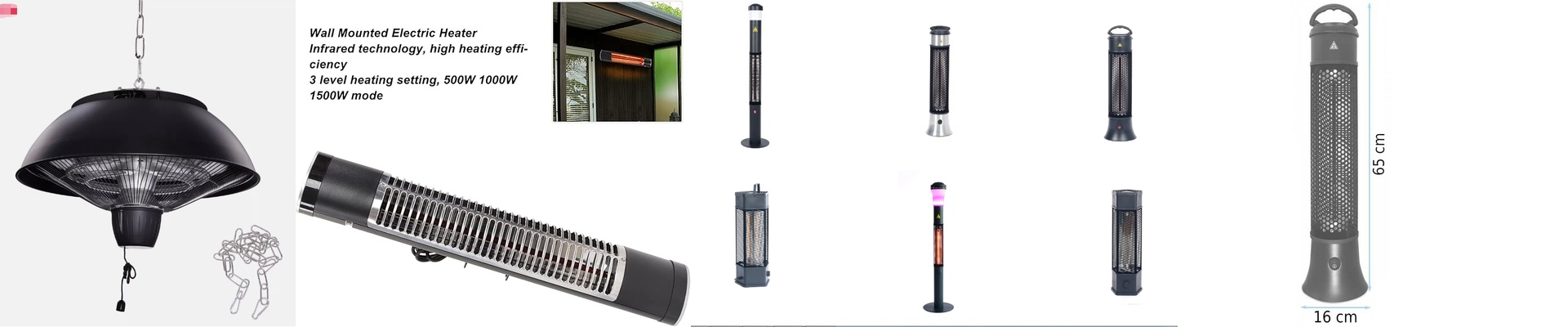


In a hot yoga studio, the heat has to come up fast—and then hold steady—without turning the air into a desert. When the room drifts lukewarm, poses get forced, breath gets choppy, and the whole class loses its flow. We built our wall-mounted electric heater to handle that exact moment. It uses infrared radiant warmth to support the practice, not fight it.
What’s actually going on under the hood
The unit runs on a carbon fiber infrared element. That means instant radiant heat—warming people and surfaces directly, instead of pushing air around like a forced-air system. You get focused warmth with minimal noise. And because the heat is directional, you can mount the heater high on the wall and still get even coverage across the floor, without harsh hot spots. It runs off a standard electric supply, and the built-in thermostat keeps the set temperature consistent—so the room holds heat between flows, without swinging hot and cold.
Why this approach fits hot yoga
In hot yoga, it’s not just about “warm.” It’s about controllable heat that helps you move deeper and settle into breath. Infrared warmth keeps muscles more pliable, which can make transitions feel smoother and make sustained stretches more comfortable. Forced-air systems tend to dry the air out and make it feel harsh. Radiant heat, by contrast, is easier on humidity levels—important when you’re breathing deep and sweating. The studio ends up feeling warm on contact, not just on the thermometer.
Practical notes from the install side
This is a wall-mounted electric heater, so clearance matters and the mounting surface has to be solid. Plan on a qualified electrician handling the install. It’s designed for indoor use in well-ventilated spaces. The exterior stays cool to the touch, but the radiant element can’t be blocked—keep curtains, mats, and equipment away from it. Set the mounting height to match the room layout, then dial in the thermostat to fit your class style—steady background heat, or faster recovery after a cooler break.